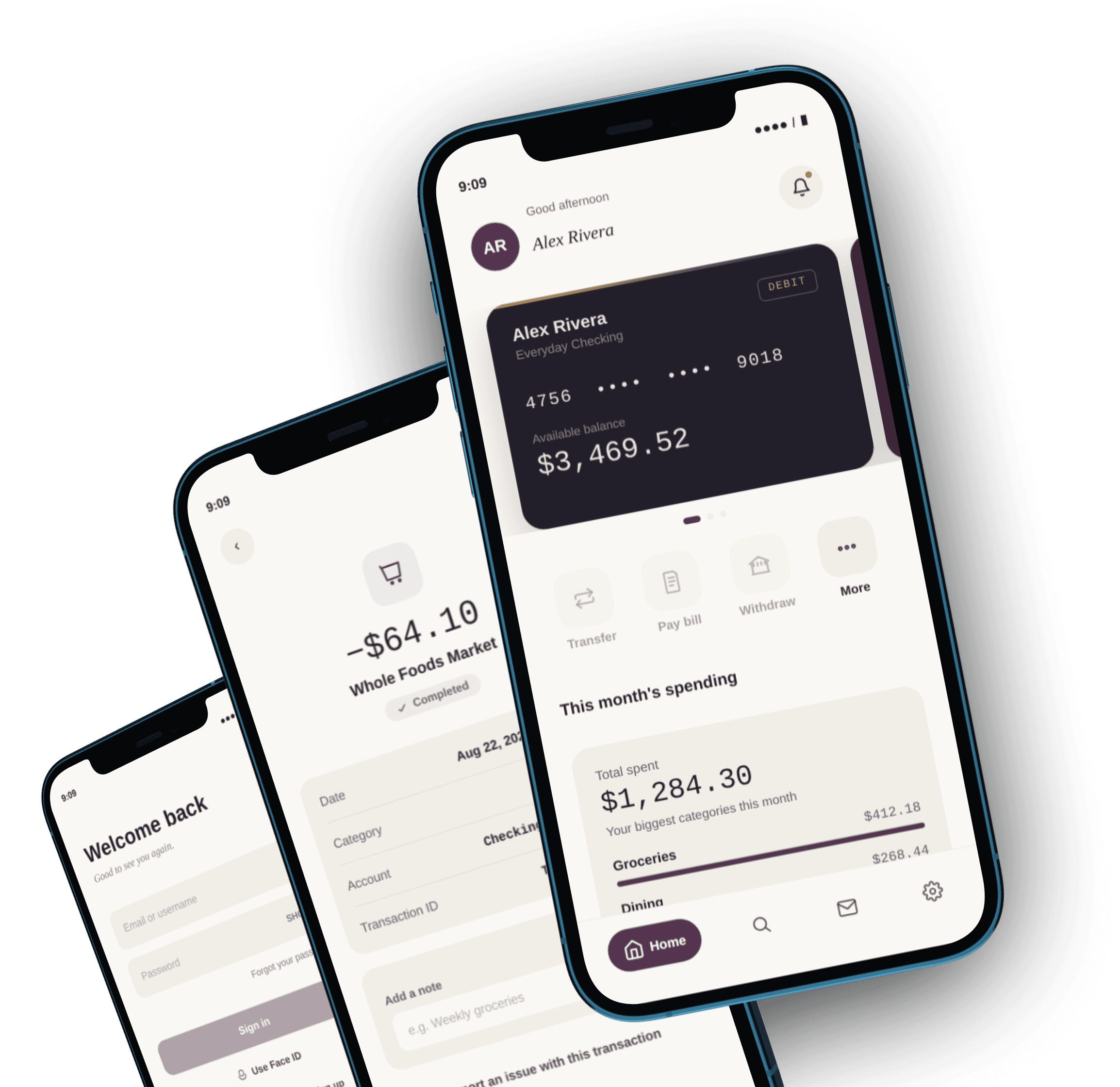
Fortify Bank
A cash flow app that actually moves money, not just tracks it.
- Role
- Solo — product, frontend, data layer
- Stack
- Next.js, TypeScript, Appwrite, Plaid, Dwolla, Zod, Sentry
- Hardest part
- Forecasting a balance forward through irregular recurring bills
- Status
- Pre-launch. Sandbox credentials, real transfer plumbing.
Shipped & Designed for












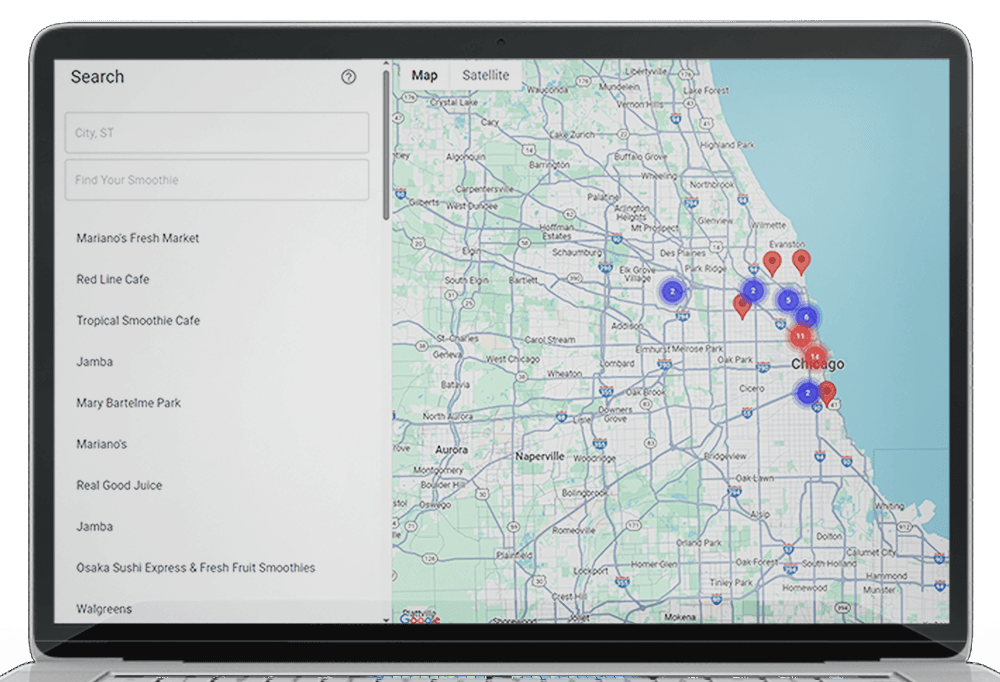
Neighborhood Map
Still maintainedA smoothie locator over Google Maps and the Foursquare API. The interesting part was connecting the API to the map so location pointers matched real geography — and knowing which components could own state and which had to receive it.
Kept alive across two deploys: V1 on Heroku, V2 rebuilt on Vercel.
What to look at, and where
Each repo has a README with setup steps. These are the files worth opening first, and the limitations I already know about.
fortify-banking
Start in docs/decisions; the ADRs explain the transfer server action, the AES-256-GCM ID change, and the recurring-rule model before you read the code.
Known limits: guest-mode route access isn't fully scoped; transfers and account settings may not degrade cleanly on dummy data.
neighborhood-map
Small enough to read in one sitting. Shows component boundaries around a third-party map instance and API data that arrives after first paint.
Known limits: pre-hooks React; the V1 Heroku deploy is kept as a historical artifact, not a live standard.
portfolio-v4
This site. Next.js app router, MDX case studies with typed frontmatter, a theme system on CSS custom properties with no flash on load, and URL-driven blog filters.
Known limits: no test suite yet.
Where I started
Kept on purpose. The distance between these and a pre-launch security audit is the point.
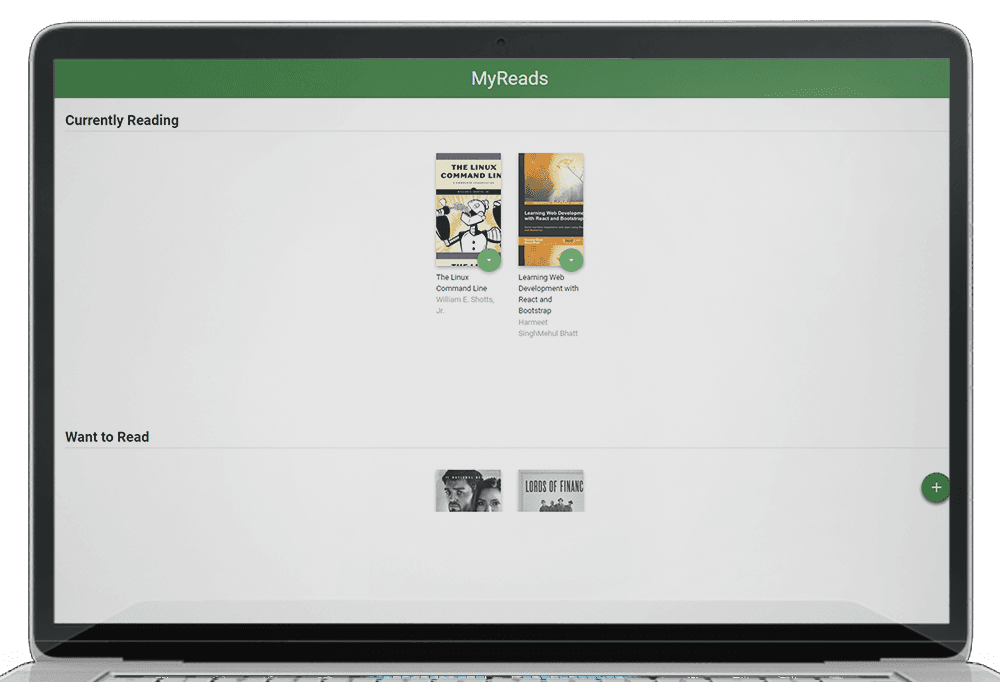
My Reads
Your personalized digital bookshelf for empowering your reading journey.
Node.js · React
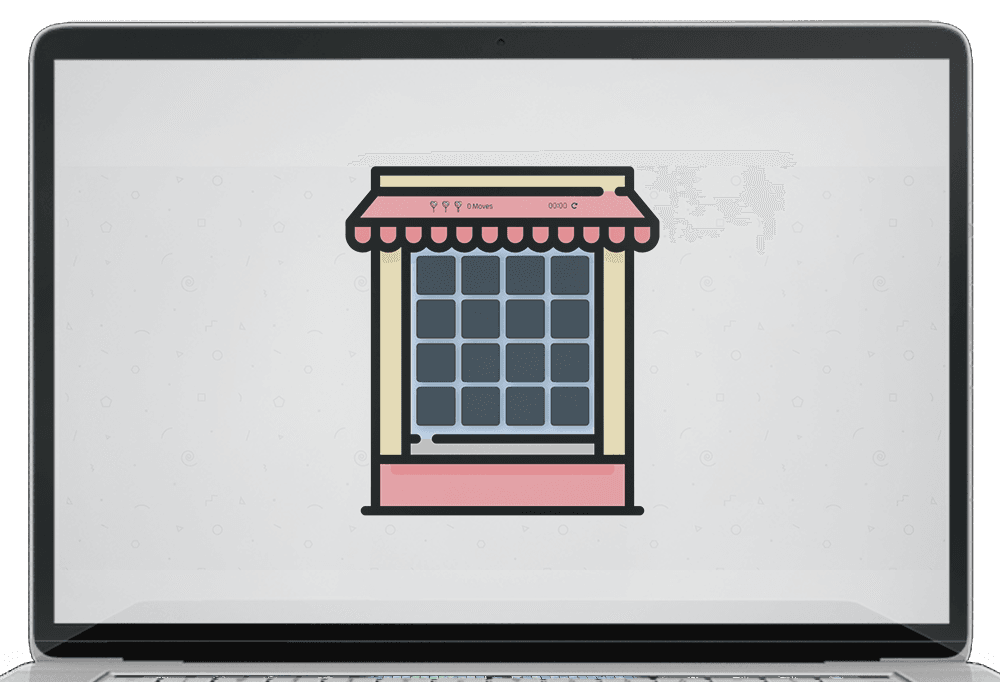
Memory Game
Flip. Remember. Match.
HTML5 · CSS3 · Javascript
Want the long version of any of this?
Experience the process
Systems Engineering Lifecycle
I follow a disciplined engineering framework to ensure every application is secure, performant, and architecturally sound. While every project is unique, these four phases are the standard for delivering high-integrity software.
01. Analysis & Logic Mapping
Every project begins with a deep dive into technical requirements and system constraints. I define the data architecture, map out complex logic, and perform a competitive technical analysis to ensure the chosen path is both efficient and scalable.
02. Architecture & Design Systems
Before writing code, I establish the UI/UX framework and system architecture. Using tools like Figma, I bridge the gap between abstract requirements and tangible prototypes, ensuring the interface is grounded in accessibility standards and clean design principles.
03. Development & Type-Safe Engineering
Implementation is driven by a modern tech stack (typically Next.js, TypeScript, and Prisma). I prioritize strict type-safety, modular component architecture, and Test-Driven Development (TDD). This phase is where I integrate secure APIs and ensure the application is responsive and performant across all environments.
04. Optimization, Deployment & Maintenance
The lifecycle concludes with rigorous optimization—focusing on Core Web Vitals, security audits, and SEO. Once deployed via CI/CD pipelines, I transition into a cycle of continuous monitoring and maintenance, using metrics and user feedback to iterate on performance and stability.